By Marcus Holloway — Independent Veterans Benefits Writer | Reviewed & updated July 26, 2026
Independent and non-government. This site is not affiliated with, endorsed by, or sponsored by the U.S. Department of Veterans Affairs (VA) or any government agency. For official information, visit VA.gov.
Help With the Parts of the Day That Have Become Hard
VA home health aide benefits exist for a specific and very common situation: a veteran who is still living at home, wants to stay there, but can no longer manage the ordinary business of daily life without help. Getting washed and dressed. Moving safely from bed to chair. Eating a meal. Remembering medication. None of that requires a hospital, but all of it requires somebody.
For households dealing with mesothelioma or advanced asbestos-related lung disease, the need often arrives faster than expected. Breathlessness and fatigue can make ordinary tasks exhausting well before anything else changes. This guide explains what the aide programme provides, who qualifies, how to request it, and how it fits alongside the other home-based support the VA offers.
Part 1: What a Home Health Aide Does
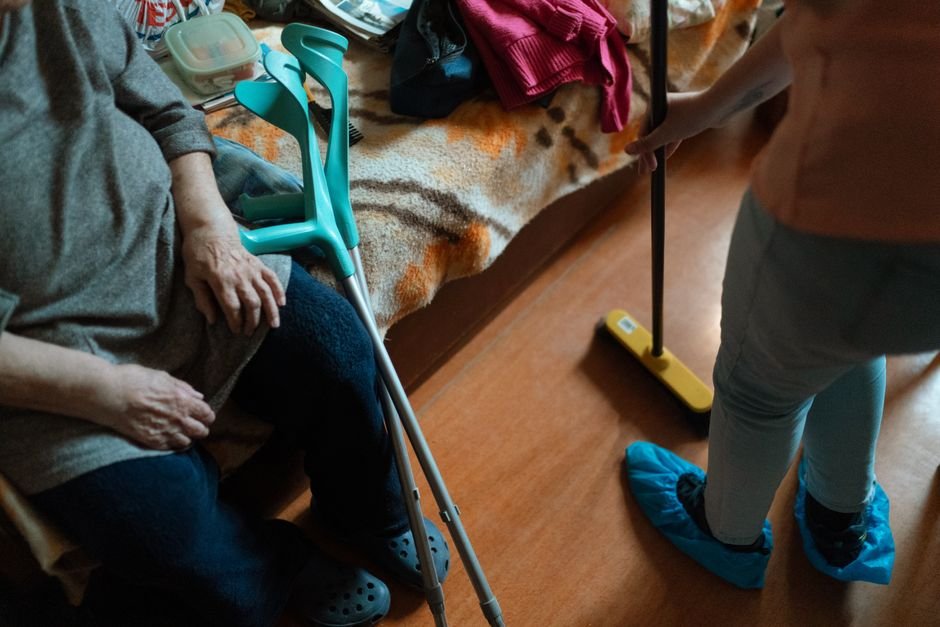
A home health aide provides personal care — hands-on assistance with the activities of daily living. In practice that usually means some combination of the following:
- Bathing, showering, grooming and dressing.
- Help getting in and out of bed, moving around the house, and transferring safely to a chair or wheelchair.
- Assistance with toileting and continence care.
- Help with eating, and preparing simple meals.
- Reminders and supervision around medication, within the limits of what an aide is permitted to do.
- Basic observation — noticing and reporting changes in the veteran’s condition.
An aide is not a nurse and does not perform skilled clinical procedures. Where those are needed, they come through a different service, and the two are frequently arranged together. An aide is also not a housekeeper; light tasks directly connected to the veteran’s care are usually within scope, general domestic work is not.
The service is typically delivered by a trained aide from an agency working under arrangement with the VA, with the care plan supervised by a VA clinician who reviews it as the veteran’s needs change.
Part 2: Who Qualifies for VA Home Health Aide Benefits
Three things generally determine access.
Enrolment in VA health care. This programme sits within the health care system, not the disability compensation system, so enrolment is the entry point. Having a disability rating is not the same thing as being enrolled, though a service-connected veteran will usually be well positioned.
Assessed clinical need. A clinician has to determine that the veteran needs assistance with activities of daily living. This is the substance of the decision, and it is based on an assessment rather than on a diagnosis alone. Two veterans with the same illness may be assessed very differently depending on how they are actually functioning.
Local availability. Services are arranged through VA facilities and contracted providers, and capacity varies by area. Rural households in particular sometimes wait longer.
Copays may apply to extended care services depending on service connection, income and the specific service. Many veterans pay nothing. Ask the social worker what applies to your circumstances rather than assuming either way — families sometimes decline to ask because they assume they cannot afford it, which is precisely the wrong order of operations.
Part 3: How to Request It
The route is the same as for most home-based VA services, and it runs through people rather than forms.
Ask the VA social worker. If the veteran is already receiving treatment, a social worker is very likely attached to the case. If not, contact the social work service at the VA medical centre directly.
Ask the treating clinician. A physician or nurse involved in the veteran’s care can make the referral, and often will if the need is described to them.
Ask at any appointment. This is worth saying because families often wait for a suitable moment that never comes. Any clinical contact is a suitable moment.
An assessment follows, usually including a conversation about what the veteran can and cannot manage, and often a visit to the home. Be accurate rather than stoic. Veterans of this generation routinely describe themselves as fine while demonstrably struggling, and the family member present should feel free to describe what they actually see. It is not disloyal; it is the only way the assessment reflects reality.
Describe the bad days, not the best day. A veteran with advanced lung disease may manage a shower unaided one morning and be unable to cross the room the next. An assessment based on the good day produces a care plan that fails on the bad one.
Part 4: How Much Help, and When
Aide support is generally provided for a set number of hours per week, structured around when help is most needed — commonly mornings, when washing and dressing happen, and sometimes evenings.
The number of hours is driven by the assessment and by available capacity, and it can be revisited. If the veteran’s condition changes — and with progressive illness it usually does — the care plan can be reassessed. Families often do not realise this and simply endure an arrangement that stopped being adequate months ago. Ask for a review; it is a normal request.
It is also worth being clear that this is not around-the-clock care. A few hours a day of skilled personal care can be transformative, but it does not replace continuous supervision where that is what is needed. If the household is approaching that point, the conversation to have is a broader one about what level of care is sustainable at home.
Part 5: How It Differs From Respite
Families frequently confuse these two, and they solve different problems.
A home health aide supplements the care the family provides. The aide comes, helps with personal care, and leaves; the family carries on as before around that.
Respite care substitutes for the family caregiver entirely for a period, so that person can rest, travel, or attend to their own health. Our guide to VA respite care covers that programme in detail.
Most households in this situation benefit from both, and they are not alternatives. Asking about one does not affect the other, and the same social worker can arrange both. Where skilled nursing, therapy, equipment or home adaptations are also needed, those come through further programmes again — the caregiver support coordinator at your VA medical centre can map out what the household is eligible for as a whole.
Part 6: Practical Things That Help
A few things make the arrangement work better in practice.
Prepare the home. Clear routes, grab rails, a shower chair and good lighting reduce both risk and the amount of assistance needed. Some equipment may be available through the VA where it is clinically indicated — ask.
Write things down. A single sheet listing medications, allergies, contact numbers and the veteran’s routine saves an enormous amount of repetition, particularly when aides change.
Be honest about what is not working. If the schedule is wrong, the hours are in the wrong part of the day, or the arrangement is not meeting the need, say so to the supervising clinician. Care plans are meant to be adjusted.
Keep the paperwork. Records of the assessment and care plan are useful if you later need to demonstrate the level of care required, including for other benefit applications.
Part 7: If the Veteran Is Not Yet Service-Connected
Where a household is struggling to access services, it is worth checking whether an underlying claim has been pursued at all. Service connection for an asbestos-related condition can affect priority within the health care system and what a veteran pays.
Those claims turn on documenting exposure decades after the fact. Our guides to how occupational specialty drives exposure findings, preparing lay statements and getting private medical records into the file cover the evidence, and an accredited Veterans Service Officer at the VFW, DAV or American Legion will help with an initial claim at no cost.
Frequently Asked Questions
Are VA home health aide benefits free?
Copays may apply to extended care services depending on service connection, income and the service involved. Many veterans pay nothing. Ask the social worker what applies in your case.
Does the veteran have to be service-connected?
The programme runs through VA health care, so enrolment and assessed clinical need are the drivers. Service connection can affect priority and copays.
Can an aide give injections or change dressings?
Those are skilled nursing tasks and generally fall outside an aide’s role. Where they are needed, they come through a different service, which can usually be arranged alongside.
Will the aide do housework?
Light tasks directly connected to the veteran’s care are typically included. General cleaning and household chores are not the purpose of the programme.
How many hours will we get?
It depends on the assessment and local capacity. It can be reviewed if the veteran’s condition changes — ask for a reassessment rather than enduring an arrangement that has stopped fitting.
Can we choose the agency or the aide?
Services are arranged through providers working with the VA, so choice is usually limited. If a particular arrangement is not working, raise it with the supervising clinician.
What if we need more than this provides?
Talk to the social worker about the full range of options, including respite, other home-based programmes and, where a condition is advanced, palliative and hospice services.
Resources
- VA — Homemaker and home health aide care
- VA — Geriatrics and extended care services
- VA — How to apply for VA health care
- VA Caregiver Support Program
- National Cancer Institute — Support for caregivers
- Free accredited claims help: VFW, DAV, American Legion.
Final Thoughts: Staying at Home Is Usually the Goal
Almost every veteran in this situation says the same thing: they want to stay in their own house. Almost every family wants that too, and then finds that the practical demands of making it happen are heavier than anyone expected.
A few hours of skilled personal care at the right time of day is often what makes the difference between that being possible and not. It is not a large intervention, and it is not an admission that things have gone wrong — it is the ordinary, sensible use of a benefit that exists precisely for this.
Ask the social worker. Describe the difficult days rather than the manageable ones. Ask what else the household might be eligible for while you are at it, and get an accredited representative to check that no underlying claim has been left unmade.
Medical disclaimer: This article is for informational purposes only and is not medical advice, diagnosis, or treatment. Consult a licensed physician or your VA care team about your specific situation.
Legal disclaimer: This article is for general information only and is not legal advice and does not create an attorney-client relationship. Consult a VA-accredited attorney, claims agent, or a Veterans Service Officer (VSO) about your specific claim.