
By Sarah Bennett — Independent Veterans Benefits Writer | Reviewed & updated July 26, 2026
Independent and non-government. This site is not affiliated with, endorsed by, or sponsored by the U.S. Department of Veterans Affairs (VA) or any government agency. For official information, visit VA.gov.
The Diagnosis That Gets Blamed on Something Else
An asbestos lung cancer VA claim is often harder to win than a mesothelioma claim, and the reason usually comes down to a single line in the medical history: smoking. Mesothelioma is so closely tied to asbestos that the exposure question dominates. Lung cancer has multiple well-documented causes, so a rater or examiner may reach for the more familiar explanation and stop there.
That is not how the law works, and it is worth understanding why. The VA does not require asbestos to be the only cause, or even the main one. The question is generally whether military asbestos exposure was at least as likely as not a substantial contributing factor in causing the disease. A veteran who smoked and who also spent four years in a ship’s fire room can be service-connected for lung cancer. This guide explains how those claims are built, what the medical evidence needs to say, and where they most often go wrong.
Part 1: What the Medical Literature Establishes
Asbestos is classified as a human carcinogen, and its link to lung cancer — separate from mesothelioma — is well established in occupational medicine. Federal health agencies including the National Cancer Institute and NIOSH document elevated lung cancer risk among asbestos-exposed workers.
The most important point for a claim is the interaction with smoking. The research consistently describes a multiplicative rather than merely additive relationship: a person exposed to both asbestos and tobacco smoke faces a risk substantially greater than the sum of the two risks considered separately. In other words, the smoking history does not push asbestos out of the picture — the two work together, and asbestos remains a contributing cause.
This is why a claim should never try to hide or minimize a smoking history. A medical opinion that acknowledges smoking and explains the synergistic effect is far more credible, and far more useful, than one that ignores it.
Part 2: The Three Elements of an Asbestos Lung Cancer VA Claim
Current diagnosis. Pathology confirming lung cancer, with cell type and staging. Most veterans have this from a civilian oncologist, and it needs to be released to the VA — our walkthrough of the VA medical release form covers that step.
In-service exposure. The same exposure showing required for any asbestos claim, driven principally by duty assignment. Engineering, construction, maintenance, and demolition roles carry the strongest presumption of probability in practice. See our guides to occupational specialty and exposure findings and, for shipboard engineering veterans, fire room and boiler work.
Medical nexus. This is the element that decides most lung cancer claims. The opinion has to do more than say the veteran was exposed and has cancer; it needs to explain why exposure was a substantial contributing factor in this particular case.
Part 3: What a Strong Medical Opinion Contains
Physicians write these opinions regularly, but they do not always know what the VA needs to see. Sharing the following with the doctor tends to produce a more usable letter.
The legal standard, in plain terms. The VA asks whether it is “at least as likely as not” (a 50 percent or greater probability) that the condition is related to service. That phrase should appear in the opinion.
An exposure history the doctor has actually reviewed. The opinion should reference the veteran’s described military exposure — the rating, the spaces, the materials, the duration — rather than saying only “reported asbestos exposure.”
Direct treatment of smoking. If there is a smoking history, the opinion should address it and explain the synergistic interaction rather than leaving it as an unexplained competing cause.
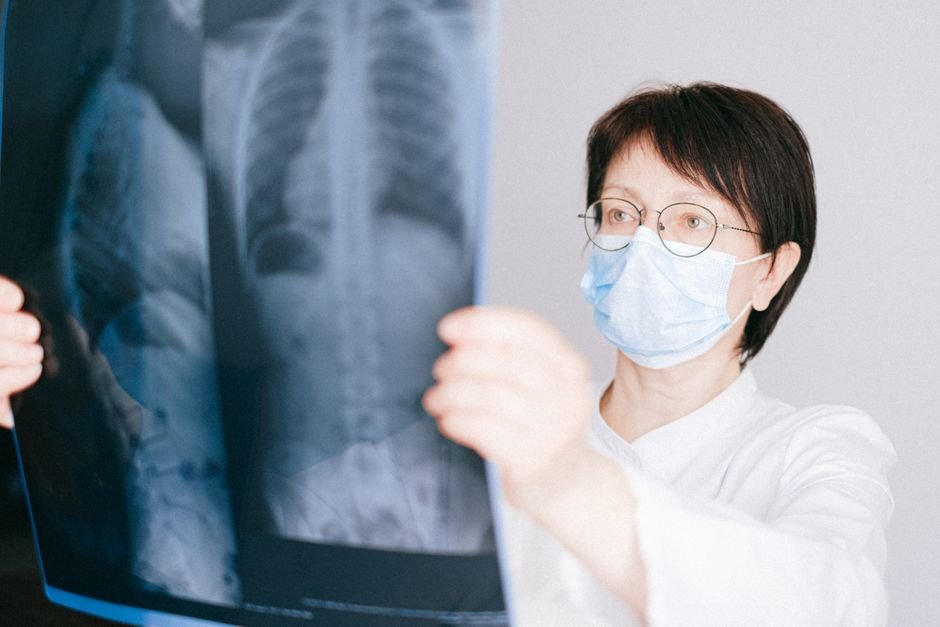
Supporting findings, where they exist. Pleural plaques, pleural thickening, or asbestosis visible on imaging are objective markers of asbestos exposure and considerably strengthen the opinion. If a scan shows plaques, make sure the opinion mentions them. Our guide to pleural plaques and VA ratings explains their separate significance.
Reasoning, not just a conclusion. A one-line assertion carries little weight. Two or three paragraphs of explanation carry a great deal.
Part 4: How Lung Cancer Is Rated
Respiratory cancers are evaluated under the VA’s rating schedule for the respiratory system. In broad terms, an active malignancy is rated at the total level while it is being actively treated, with that evaluation continuing for a defined period after treatment ends.
After that period, the VA conducts a re-examination and rates on residuals — typically the remaining impairment of lung function measured by pulmonary function testing, along with any surgical residuals. This means the rating can decrease after successful treatment, which surprises many families. It is not a penalty; it reflects how the schedule is structured around current impairment.
Because rate tables and evaluation criteria change, check the current figures on the official VA compensation rates page rather than relying on numbers quoted anywhere else, including here. As of the 2026 rate tables, amounts also vary by dependent status.
Veterans whose service-connected respiratory impairment prevents them from working may have additional avenues worth discussing with a representative, and survivors may have their own entitlements if the veteran has passed. Those are distinct programs with their own criteria.
Part 5: Where These Claims Go Wrong
A few failure patterns recur often enough to be worth naming.
The examiner attributes everything to smoking. A VA examination opinion that says “less likely than not related to service; the veteran has a 40-pack-year smoking history” without discussing asbestos at all is incomplete reasoning. That is a specific, identifiable problem — and a private opinion that addresses the interaction directly is the usual response.
The exposure is asserted but not described. “Exposed to asbestos in the Navy” gives a rater nothing. Spaces, materials, tasks, and dates give a rater something to find.
No supporting imaging findings are flagged. Plaques or interstitial changes on a CT scan are frequently noted in a radiology report and then never mentioned again. They are evidence — point to them.
Inconsistent history. If the claim says one thing and the treatment records say another, credibility suffers. Consistency across every document matters more than any single strong statement.
The claim is filed for the wrong condition. Some veterans file only for the cancer and never mention the pleural findings, asbestosis, or breathing impairment documented on the same scans. Each of those can be a separate contention with its own evaluation, and claiming them together gives the rater the full clinical picture rather than a single isolated diagnosis. An accredited representative can identify which conditions the medical records actually support before anything is submitted.
Nobody asks the treating physician. Veterans sometimes assume the VA will develop the medical opinion on its own. It may order an examination, but an examiner meeting the veteran once has far less context than the oncologist who has managed the case for two years. The single highest-value action in most of these claims is a direct request to the treating physician for a written opinion — and physicians are generally willing when asked clearly and given the standard to apply.
Part 6: Practical Steps
Start by collecting the pathology report, staging, treatment records, and every imaging report — particularly anything mentioning pleural findings. Request the Official Military Personnel File from the National Personnel Records Center to establish duties and assignments. Write a detailed exposure statement covering spaces, materials, tasks, dates, and protective equipment. Ask the treating oncologist or pulmonologist for a written nexus opinion, and give them the standard and the exposure history to work from. Then contact an accredited Veterans Service Officer at the VFW, DAV, or American Legion — their help with an initial claim is free, and they know how these files are argued.
Where a crewmate can corroborate the exposure, add a statement; our guide to lay statements covers the format. After filing, you can track the file yourself using our guide to checking claim status online. Where treatment is making daily life difficult at home, our guides to home health aide support and respite care for family caregivers cover the help available.
Frequently Asked Questions
Can I win an asbestos lung cancer VA claim if I smoked?
Yes, veterans do. The VA standard asks whether service-related exposure was at least as likely as not a substantial contributing factor, not whether it was the only cause. A medical opinion that addresses the synergistic effect of asbestos and tobacco is generally the key document.
Is lung cancer a presumptive condition for asbestos exposure?
Generally no. These claims are decided on direct service connection, which means exposure and a medical link both have to be shown.
Do I need pleural plaques on a scan to succeed?
They are not required, but they help considerably because they are objective evidence of asbestos exposure. Ask whether prior imaging shows any pleural findings.
What if a VA examiner blames smoking entirely?
That is an addressable problem rather than a final answer. A private physician’s opinion that engages with the asbestos exposure and the interaction between the two causes is the usual response. Discuss the options with an accredited representative.
Will my rating drop after treatment ends?
It can. Active malignancy is rated at the total level for a period, after which the VA re-examines and rates residual impairment, generally based on pulmonary function testing.
Does the type of lung cancer matter?
The medical opinion may address cell type, but no particular type is required for a claim. What matters is the reasoned link to exposure.
Can survivors claim after the veteran dies of lung cancer?
Separate survivor programs exist and the evidence assembled for the veteran’s claim generally supports them. An accredited representative can explain which apply to your family.
Resources
- VA — Asbestos exposure and disability compensation
- VA — Current compensation rate tables
- National Cancer Institute — Asbestos exposure and cancer risk
- CDC / NIOSH — Asbestos and occupational lung disease
- American Cancer Society — Lung cancer information
- Free accredited claims help: VFW, DAV, American Legion.
Final Thoughts: The Cause Does Not Have to Be the Only Cause
Many veterans never file for lung cancer because they assume the smoking history settles the question. It does not. The standard the VA applies was written to accommodate exactly this situation — a disease with more than one contributing cause, one of which happened in uniform.
What decides these claims is the quality of the medical opinion and the specificity of the exposure account. Both are within reach: the treating physician already knows the medical history, and the veteran already knows what the work was. Put those two things in writing properly, get free help from an accredited representative, and let the claim be decided on the full picture rather than on the easiest assumption.
Medical disclaimer: This article is for informational purposes only and is not medical advice, diagnosis, or treatment. Consult a licensed physician or your VA care team about your specific situation.
Legal disclaimer: This article is for general information only and is not legal advice and does not create an attorney-client relationship. Consult a VA-accredited attorney, claims agent, or a Veterans Service Officer (VSO) about your specific claim.