By Eleanor Whitfield — Independent Veterans Benefits Writer | Reviewed & updated July 26, 2026
Independent and non-government. This site is not affiliated with, endorsed by, or sponsored by the U.S. Department of Veterans Affairs (VA) or any government agency. For official information, visit VA.gov.
The Finding on a Scan That Most Veterans Ignore
A pleural plaques VA disability rating is one of the most misunderstood outcomes in the entire asbestos claims process, and the misunderstanding costs veterans real ground. Here is the pattern: a veteran has a chest CT for an unrelated reason, the radiologist notes calcified pleural plaques, the doctor says they are benign and require no treatment, and the veteran forgets about it. Years later, a more serious asbestos-related condition develops — and the claim has to start from zero.
Pleural plaques are, in most cases, not disabling. They are also the clearest objective proof of asbestos exposure that a veteran can have. Understanding what they are, why the rating is frequently zero percent, and why a zero percent award is still worth having is the difference between a file that protects you and one that does not exist.

Part 1: What Pleural Plaques Actually Are
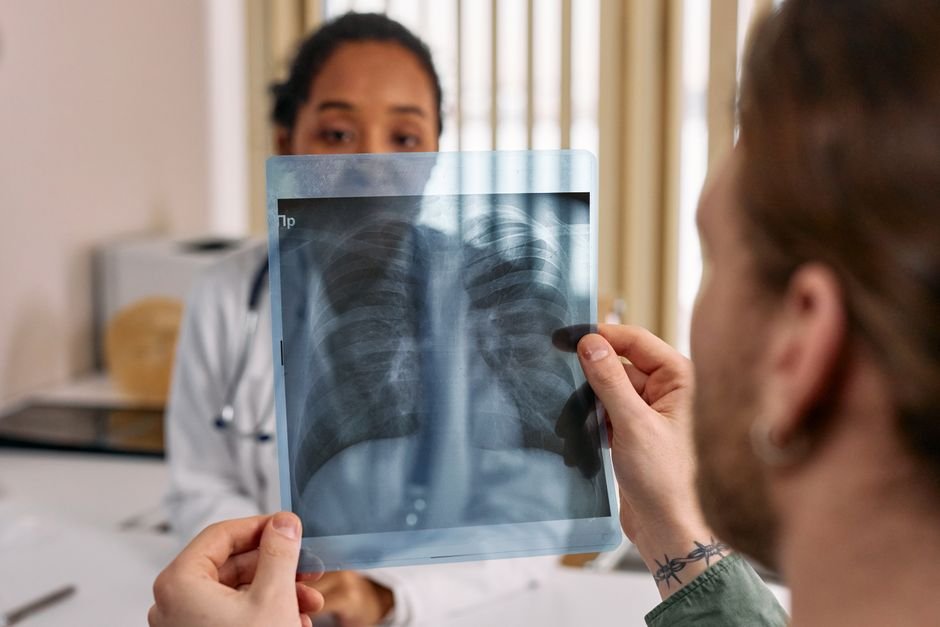
The pleura is the membrane lining the lungs and chest wall. Asbestos fibers that reach the lung periphery can migrate to this membrane and provoke a localized fibrous reaction. Over decades, those areas thicken and often calcify, becoming visible on imaging as discrete plates or patches — pleural plaques.
Several points matter for a claim. Plaques are strongly associated with asbestos exposure and are widely regarded in occupational medicine as a marker of it. They typically appear twenty to forty years after exposure. In most people they cause no symptoms and do not measurably impair breathing. And they are not cancer and do not turn into cancer.
That last point is worth emphasizing plainly, because it is a common fear. Plaques themselves are benign. What they indicate is that meaningful asbestos exposure occurred, which is why people who have them are monitored more closely for other asbestos-related conditions.
Distinguish plaques from diffuse pleural thickening, which is a more extensive process that can restrict lung expansion and cause measurable impairment. Radiology reports use these terms differently, and the distinction affects the rating.
Part 2: Why a Pleural Plaques VA Disability Rating Is Often Zero Percent
The VA rating schedule is built around functional impairment. Restrictive lung diseases are evaluated principally on pulmonary function testing — the FVC and DLCO values that measure how much air the lungs move and how efficiently they transfer oxygen.
Asymptomatic pleural plaques generally do not move those numbers. When the testing is normal, the criteria for a compensable percentage are not met, and the result is a zero percent evaluation. Veterans frequently read that as a denial. It is not.
A zero percent rating is a grant of service connection. The VA has formally accepted that you were exposed to asbestos in service and that a resulting condition exists. It simply is not causing compensable impairment right now. That distinction is enormously consequential, as the next section explains.
Part 3: Why a Zero Percent Award Is Worth Pursuing
Four practical benefits follow from having service connection on the books, even at zero percent.
The exposure question is settled. The hardest element of any asbestos claim is proving in-service exposure. Once the VA has conceded it for one condition, that finding is in your file. A later claim for a different asbestos-related disease starts from a far stronger position.
Progression can be claimed. If plaques develop into diffuse thickening, or if pulmonary function declines, you can pursue an increased evaluation. That process is procedurally simpler than establishing service connection from scratch.
Evidence is preserved while it exists. Records get lost, witnesses die, and memories fade. Establishing exposure in 2026 while a shipmate can still write a statement is far easier than establishing it in 2036.
Combined ratings and monitoring. A service-connected condition brings the veteran into the VA’s awareness for that body system, which can matter for follow-up care and for how future claims are developed.
Veterans sometimes decline to file because “it is only zero percent.” The percentage is not the point. The concession of exposure is.

Part 4: When Plaques Do Rate Above Zero
Compensable evaluations become available where there is measurable impairment. The circumstances that produce one generally include the following.
Reduced pulmonary function. Where FVC or DLCO values fall below the thresholds in the rating criteria, a percentage evaluation follows. The specific breakpoints are set out in the VA’s rating schedule for the respiratory system.
Diffuse pleural thickening. More extensive involvement can restrict chest wall movement and produce genuine restrictive impairment on testing.
Associated asbestosis. Where interstitial fibrosis is present alongside plaques, that condition is evaluated on its own criteria and typically drives the rating.
Pain and other residuals. Some veterans report chest discomfort. Whether and how that is compensated depends on the findings, and it is worth reporting to the examiner rather than downplaying.
Because rating criteria and compensation amounts change, verify current figures on the VA’s official rate tables rather than relying on numbers quoted elsewhere. As of the 2026 rate tables, payment amounts also vary with dependent status.
Part 5: Building the Claim
The evidence needed is the same as for any asbestos claim, with one advantage: the diagnosis is usually already documented on imaging you did not have to fight for.
Gather the radiology reports naming plaques or pleural thickening, and note the date of the earliest one. Establish in-service exposure through your personnel records and a detailed statement — the framework is covered in our guide to occupational specialty and exposure findings, with branch- and setting-specific detail in our pieces on fire room work, construction battalions, and base housing. Obtain a medical opinion stating that the plaques are at least as likely as not related to that exposure — for plaques this is usually uncontroversial, since the association is well recognized.
To bring private imaging and treatment records into the VA file, see our walkthrough of the VA medical release form. Where a crewmate can confirm the exposure, our guide to lay statements covers the format.
Part 6: Living With Plaques and Monitoring
Because plaques indicate exposure, physicians typically recommend ongoing surveillance rather than treatment. What that looks like is a decision for your doctor, but the general shape is periodic imaging, pulmonary function testing when symptoms change, and prompt evaluation of new respiratory symptoms.
The single most useful health step for anyone with asbestos exposure is not smoking, given the well-documented interaction between asbestos and tobacco in raising lung cancer risk. That interaction is discussed further in our guide to asbestos-related lung cancer claims.
It is also reasonable to keep your own copies of every imaging report. If a future claim is needed, having the sequence of scans in hand makes documenting progression considerably easier.
Something worth raising with your physician is whether the plaques were an incidental finding or whether anyone has looked for related conditions. Plaques often turn up on a scan ordered for something else entirely — a cardiac workup, an injury, a pre-surgical assessment — and the report notes them in passing without any follow-up. Asking whether pulmonary function testing is warranted, and whether the imaging shows any interstitial changes suggestive of asbestosis, can surface a compensable condition that nobody has yet evaluated.
Part 7: Telling Your Family What the Finding Means
Veterans frequently keep this to themselves, partly because the doctor described it as nothing to worry about and partly because raising it invites questions about the service years. There is a practical reason to share it anyway.
If a more serious asbestos-related illness develops later, the people who will be assembling records and statements are usually a spouse or an adult child. Knowing in advance that plaques were found, which scan showed them, where the veteran served, and what the work involved saves that family an enormous amount of reconstruction at the worst possible time. A single page kept with the household papers — service dates, ship or unit, the nature of the work, the date and facility of the scan showing plaques — is a genuine kindness to whoever handles it later.
Frequently Asked Questions
Is a zero percent pleural plaques VA disability rating a denial?
No. Zero percent means service connection was granted but the condition does not currently meet the criteria for a compensable evaluation. The exposure finding is in your file and supports future claims.
Do pleural plaques become mesothelioma?
No. Plaques are benign and do not transform into cancer. They indicate that asbestos exposure occurred, which is why physicians monitor people who have them.
Can I get an increase if my breathing gets worse?
Yes. If pulmonary function testing declines or thickening progresses, you can seek an increased evaluation. Keep the records that show the change over time.
Should I file even though I feel fine?
Many veterans and representatives consider it worthwhile precisely because you feel fine — it establishes exposure while the evidence is still available. Discuss it with an accredited representative.
What is the difference between plaques and pleural thickening?
Plaques are localized, discrete areas of fibrosis and often asymptomatic. Diffuse pleural thickening is more extensive and can restrict lung expansion, which is more likely to produce a compensable rating.
Do I need a specialist to diagnose plaques?
They are usually identified on routine chest imaging read by a radiologist. A pulmonologist may be involved in evaluating function and monitoring.
Will filing affect my other VA benefits?
Adding a service-connected condition does not reduce existing entitlements. How ratings combine is a technical calculation an accredited representative can explain for your specific situation.
Resources
- VA — Asbestos exposure and disability compensation
- VA — Current compensation rate tables
- eCFR — Title 38 Part 4, VA Schedule for Rating Disabilities
- CDC / NIOSH — Asbestos-related disease
- National Cancer Institute — Asbestos exposure and cancer risk
- Free accredited claims help: VFW, DAV, American Legion.
Final Thoughts: File It While It Is Simple
A radiologist’s note about calcified plaques is easy to dismiss. Nothing hurts, nothing needs treating, and the doctor moves on to whatever prompted the scan in the first place. But that line in the report is the VA’s own preferred kind of evidence — objective, contemporaneous, and specific to asbestos.
Filing while the finding is benign is the least stressful version of this process a veteran will ever face. There is no urgency, no serious illness to manage alongside the paperwork, and no pressure. Establishing service connection now means that if something more serious ever appears, the hardest question in the file has already been answered. Talk to an accredited Veterans Service Officer, put the scan in front of them, and let them tell you whether it is worth filing. It usually is.
Medical disclaimer: This article is for informational purposes only and is not medical advice, diagnosis, or treatment. Consult a licensed physician or your VA care team about your specific situation.
Legal disclaimer: This article is for general information only and is not legal advice and does not create an attorney-client relationship. Consult a VA-accredited attorney, claims agent, or a Veterans Service Officer (VSO) about your specific claim.